01 · MITC FRAMEWORK
MITC integration framework
The framework and contributions below are proposed in the 2026 MITC Profile.
Ecological Platform — Coastal Arboretum
Sustainability System — Blue-Green Campus
Community Network — coastal villages
02 · MITC FUNCTIONS
Five main functions
Functions designed to connect information, research, training, innovation and field learning.
Information Center
Mangrove database, coastal GIS and monitoring, and a blue carbon data bank.
Training Center
Mangrove rehabilitation, nature-based ecotourism, ecosystem-based waste management and restorative aquaculture training.
Research Hub
Blue carbon assessment, coastal ecology, nature-based solutions and water biofiltration technology.
Innovation Hub
Mangrove economy models, mangrove-derived products and digital monitoring systems.
Education & Edutourism
Mangrove educational tourism, student field practice, and school and public programmes.
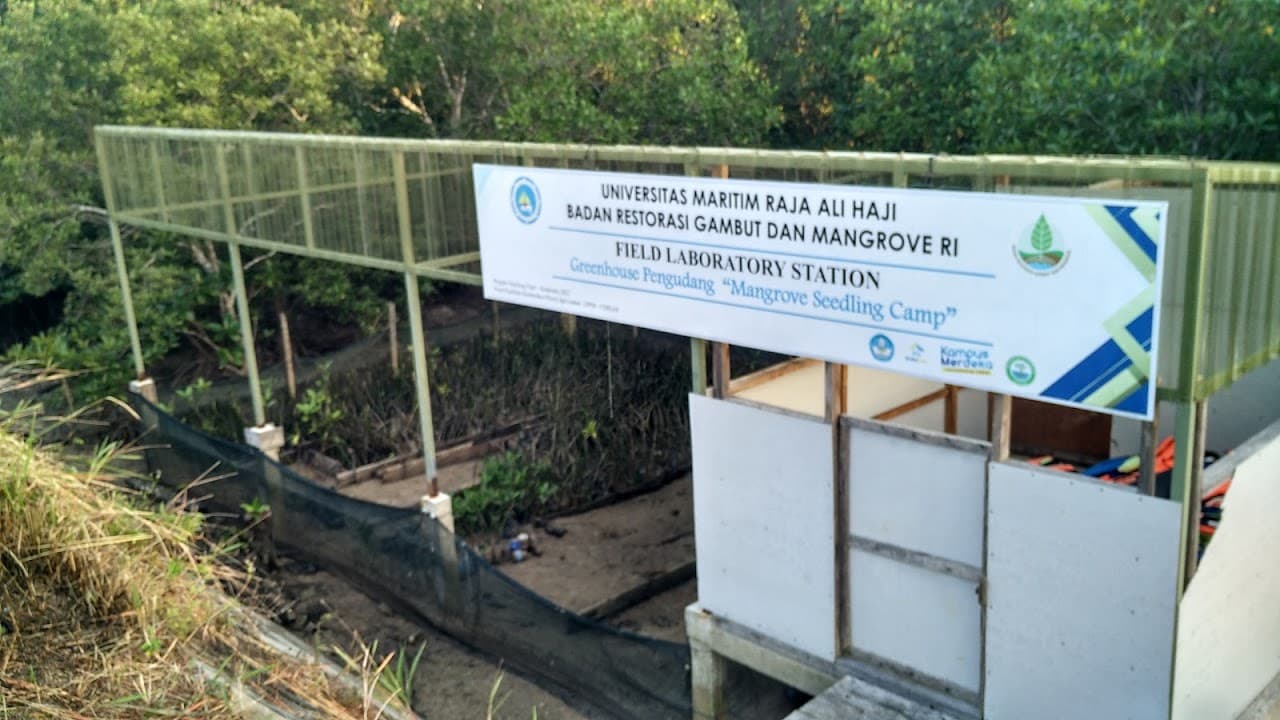 Photo: Tekad Matulatan · Google Maps
FIELD FACILITY
UMRAH Mangrove Seedling Camp
A field laboratory station and greenhouse in Pengudang for mangrove seedling activities.
5F9W+6V5, Pengudang, Teluk Sebong District, Bintan Regency, Riau Islands
View location & photos on Google MapsIntegrated with the Coastal Arboretum
The Coastal Arboretum is envisioned as a conservation platform and a setting for MITC's field learning and experiments.
- Conservation zone and species collection
- Mangrove seedling nursery
- Direct learning resource
- Field experiment and implementation platform
Contribution to the Blue-Green Campus
The MITC profile proposes a role in supporting an ecosystem-based campus system.
- CO₂ reduction through mangroves as carbon sinks and campus emissions measurement
- Water management through wetland treatment and wastewater biofiltration
- Waste management through organic recycling and plastic-reduction education
Alignment with the SDGs
Proposed contributions listed in the 2026 MITC Profile; indicators are monitoring proposals, not reported achievements.
Core focus
Life Below Water
Mangrove rehabilitation, coastal habitat protection, pollution reduction, and biodiversity and water-quality monitoring.
Climate Action
Blue carbon and mitigation through campus carbon accounting and linking emissions with mangrove absorption.
Life on Land
Coastal vegetation protection, ecosystem restoration, the arboretum and local species research.
Supporting goals
Clean Water and Sanitation
Wastewater treatment and water biofiltration.
Sustainable Cities and Communities
Coastal community training and ecotourism.
Responsible Consumption and Production
Circular waste management and plastic reduction.
Quality Education
Living laboratory, practice-based learning and student research.
Partnerships for the Goals
Multi-stakeholder national and international collaboration.